Carol Munar

Product Designer

Say Hola!
Agrofy

From Quotations to Online Sales in Agribusiness

Year 2019
Industry B2B/B2C · SaaS · AgroTech
Scope Senior Product Designer
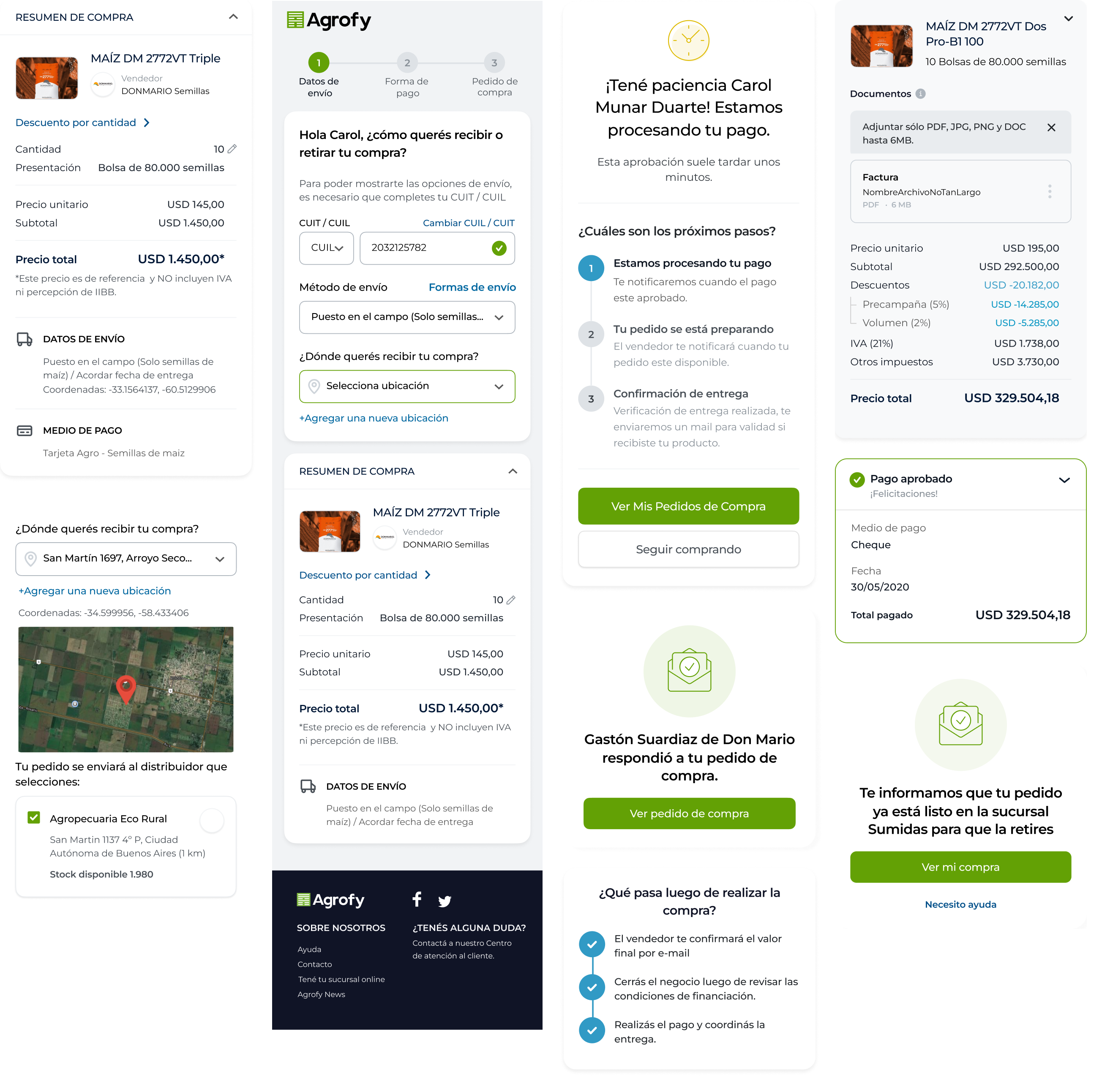
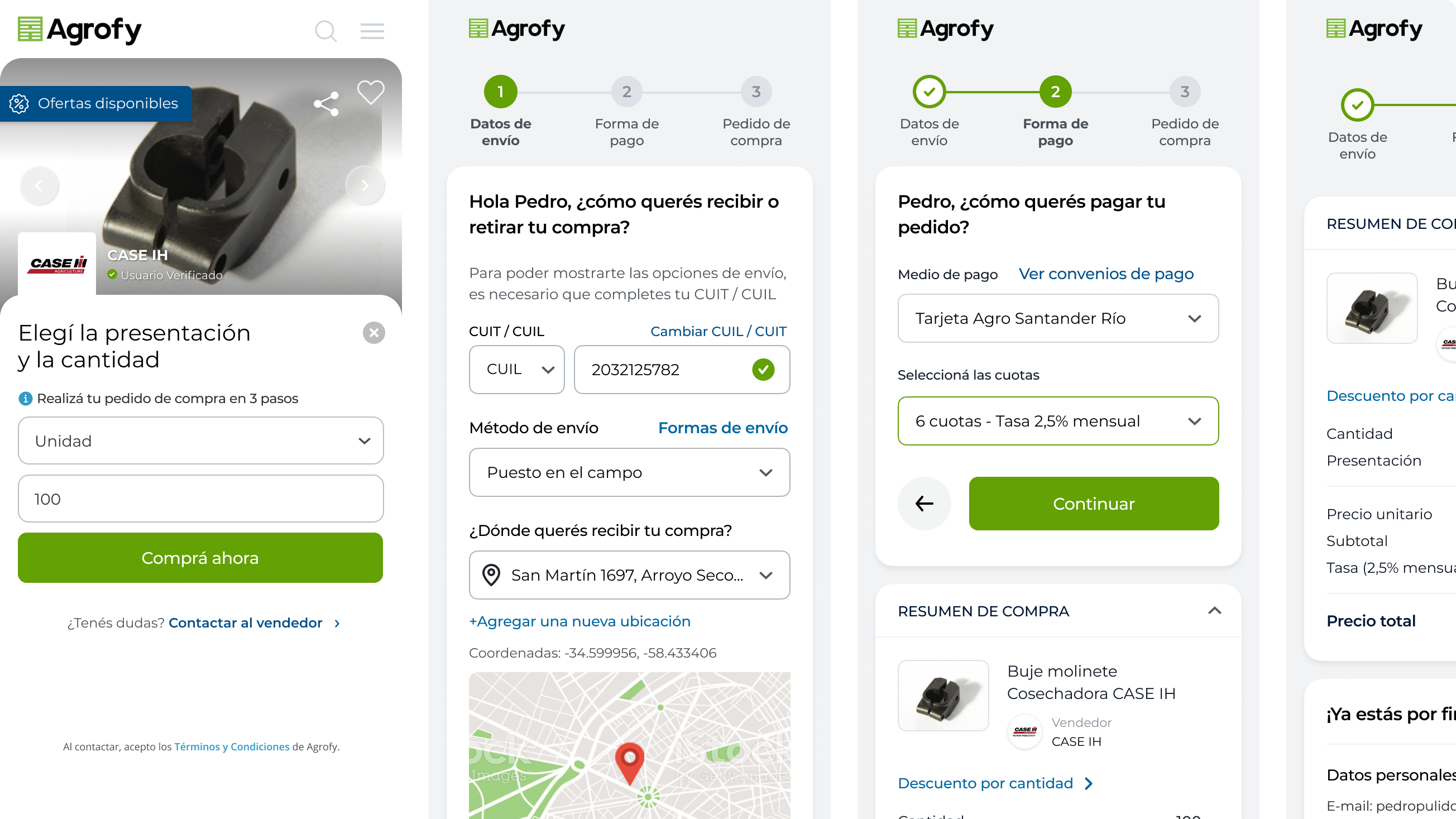
Agrofy — mobile checkout flow: product page, shipping, payment, and order summary

Agrofy was generating 6,000+ quotations across Argentina and Brazil. Buyers were interested. Merchants were responding. But every transaction happened offline.

No visibility into conversions. No transaction fees. No leverage to attract new merchants.

The business team saw the opportunity: shift to real online sales. But selling agricultural products online in Latin America was complicated.

In Argentina, hyperinflation meant prices changed week to week. Merchants didn't want to lock in prices. Payment methods ranged from credit cards to canje (bartering). Delivery? 50-ton tractors and truckloads of seeds.

Brazil was more stable but expected boleto—a payment method that doesn't exist in Argentina.

The Brief

Replicate an offline sales process that's messy, region-specific, and relationship-dependent—and make it work online.

I talked to buyers and sellers across Argentina and Brazil. I also traveled to Rosario, Argentina for Expo Agro, one of the largest agricultural trade shows in Latin America, where I interviewed farmers and merchants on the floor, watching how they negotiated prices, discussed logistics, and structured payments in real time.

What I Learned

Prices are negotiated, not fixed. Locking in a price felt risky to merchants.

Delivery requires coordination. Buyers needed to arrange transport to farms hundreds of kilometers away.

Payment methods vary wildly. Credit cards in Brazil, canje in Argentina, extended terms tied to harvest cycles.

Seeds are seasonal. Farmers buy based on planting seasons, not year-round.

I mapped the quotation flow and the desired checkout flow. Aligning stakeholders—customer success, support, engineering, product, CTO, CEO—took weeks of meetings.

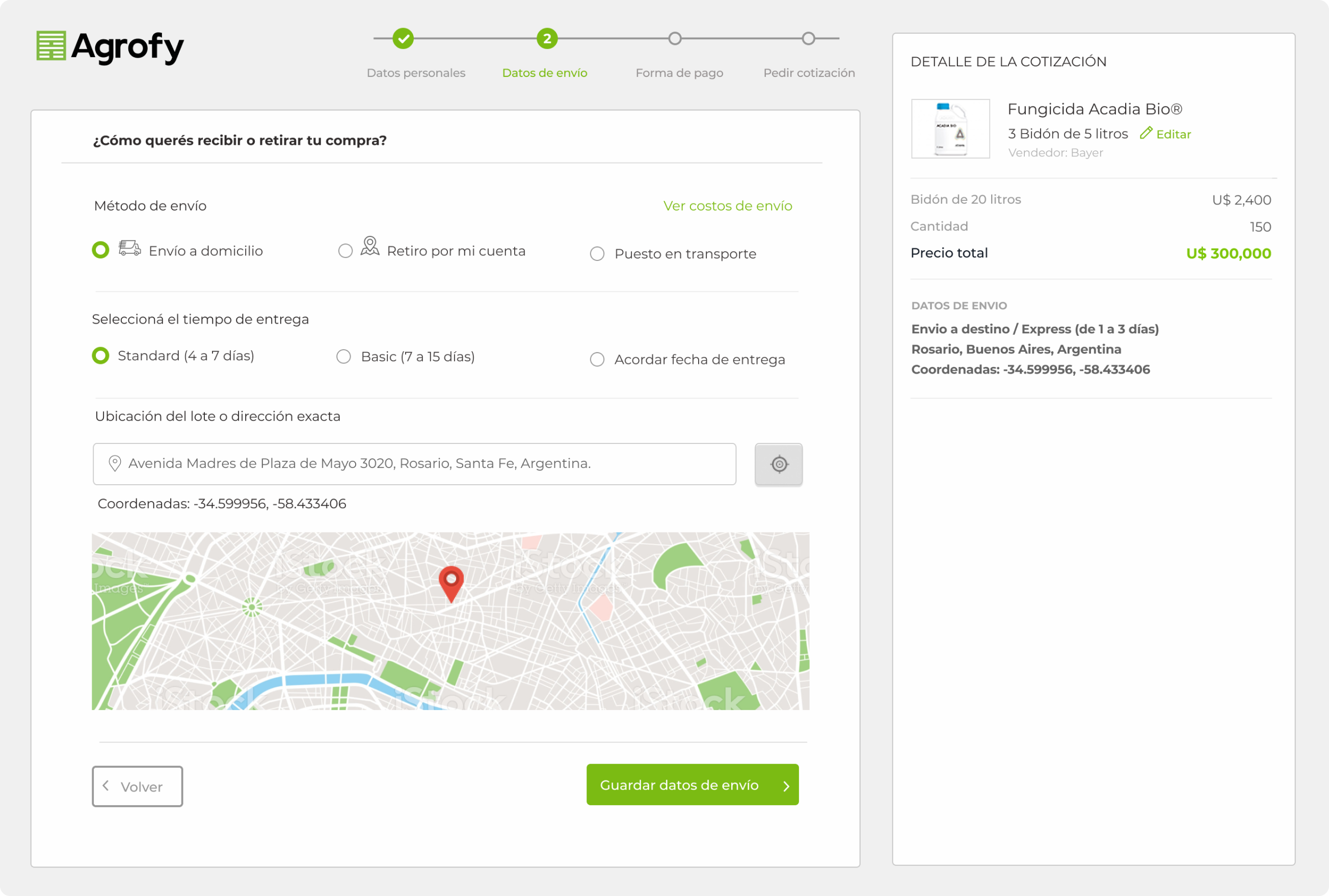
I designed a checkout flow that respected how agribusiness actually works:

Flexible pricing.

Merchants could set prices online but also require a conversation before finalizing.

Direct communication for delivery.

Buyers and merchants could message to coordinate pickup. We used farmers' language: "puesto en el campo" (delivered to the field).

Localized payment methods.

Boleto in Brazil. Credit cards, checks, canje in Argentina. Merchants could specify terms like "30/60/90 days post-harvest."

Category-specific flows.

Seeds and machinery had different needs, so we built variations.

We launched a beta with machinery and seeds. I monitored 6,186 Hotjar recordings to see where users got stuck.

Biggest Drop-offs

Payment methods (48.78% abandonment). Users confused about which options applied.

Delivery options (23.56% abandonment). UI didn't make it obvious who arranges transport.

I iterated: clarified payment descriptions, turned logos into selectable buttons, surfaced delivery summary earlier.

Metric Result
First online sale Tractor (Brazil), 4 months post-launch
Checkout completion 14.5% during beta (8 of 55)
Payment abandonment 48.78% → ~35%
Delivery abandonment 23.56% → ~18%

Business Impact

New revenue stream: transaction fees on completed sales

Merchant acquisition improved: real checkout made Agrofy competitive

Checkout scaled to tools, fertilizers, and other categories

Offline processes need translation, not copying.

Farmers don't "add to cart." They negotiate, coordinate, plan around harvests. The design had to respect that rhythm.

Context-specific design beats one-size-fits-all.

Boleto in Brazil, canje in Argentina. Localization wasn't translation—it was understanding regional economics.

Data tells you where users break, research tells you why.

Hotjar showed abandonment. Field research explained it: distrust of locked prices, confusion about payment terms, need to coordinate delivery.